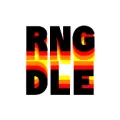
RNGdle



More Games You'll Love















RNGdle: One Roll, No Takesies Backsies
RNGdle is a daily game built around a single mechanic that sounds absurd until you press it: one random number between 0 and 1,000,000. You hit the button. The game assigns you a rarity tier—common, rare, epic, anomaly, or worse—based on hidden mathematical properties lurking inside that number. Then you're done. Tomorrow you get another shot. That's the entire experience, and it works precisely because there's nowhere to hide.
The appeal sits in what the game doesn't let you do. You don't strategize. You don't grind. You don't optimize. Press once, get your number, watch the badges appear, and accept whatever probability handed you. Some rolls land palindromes or repeating digit patterns. Others trigger prime sequences or meme numbers that the game recognizes with rare badges. Most rolls are forgettable. A few look cursed. Occasionally one looks blessed. RNGdle turns that binary outcome—roll or nothing—into a daily ritual that keeps people coming back.
How RNGdle Works: The Mechanics
Your roll pulls from a massive range: zero through one million. That scale matters. It creates genuine surprise because the possibility space is genuinely large. The game then scans your number for hidden features. Does it contain a palindromic sequence? Repeating digits stacked together? Prime properties? Special patterns the community learned to recognize? Each discovery earns badges. Each badge carries its own rarity rank—common badges are noise, while mythic badges earn screenshots and leaderboard mentions.
The rarity system matters too. Your number gets ranked not just by raw EP (entropy points), but by how statistically unusual its feature combination is. A number that looks plain on the surface might hide a rare mathematical property inside. A flashy number might score lower than expected. This creates the game's core tension: you never fully know what you've rolled until the system finishes its scan.
Leaderboards track daily, weekly, and all-time performers. Some boards sort by pure EP. Others organize by badge type, so players can hunt specific achievement categories. This competitive layer stays soft—it doesn't pressure you, but it offers direction if you want it.
Playing RNGdle: The Four Steps
Open and wait. You visit the game, see the roll button waiting. This is your one daily chance. The anticipation builds before you even touch anything.
Press the button. You click. A number generates instantly—146165 or 727963 or 434749. Whatever emerges becomes your result for the day. It locks in. No edits. No rolls in the background that you pick from later. This is it.
Watch the scan. The game checks your number against its badge library. Patterns appear on screen: Palindrome, Repeating Digits, Prime Number, Three of a Kind, or stranger badges tied to internet culture. Each badge shows its rarity color—common, rare, epic. Your total EP ticks up.
Decide what's next. You can screenshot the result, share it with friends, check the leaderboard, or just move on. Tomorrow the button resets and you get one more roll.
Why RNGdle Feels Different
Most games train you to optimize. Better equipment means better results. More time played means higher rank. You control your outcome through effort. RNGdle rejects that entirely. Try to force a better number and nothing changes—you still get whatever the random function spits out. This sounds frustrating. Instead it feels liberating. You're not failing if your roll is weak because failure doesn't apply. You got your number. That's the win condition. Everything else is flavor.
The badge system creates secondary engagement. Over time you learn what patterns matter. Palindromes feel satisfying. Repeating sequences trigger recognition. Prime numbers carry mathematical cache. Meme numbers—like 420 or 777—hit differently. This literacy turns future rolls into moments of discovery rather than just numbers on a screen. You start reading your results instead of dismissing them.
Sharing becomes natural because rolls are genuinely distinct. Your friend got 627826. You got 312113. These aren't abstract stats—they're tangible, screenshottable outcomes that invite comparison without requiring it. Leaderboards exist but don't mandate competition. Most players just enjoy the daily spectacle and move forward.
The Core Appeal: Acceptance Over Mastery
RNGdle works because it's honest about randomness. You get one roll. The roll is what it is. No skill changes the outcome. No strategy improves your odds on any given day. The only real skill is appreciating what you received and recognizing when probability did something unusual. That reframe—accepting rather than optimizing—feels fresh in a gaming landscape built around progression and grinding.
The game also respects your time. One roll takes seconds. You're not locked into long sessions. You're not climbing skill trees or farming materials. You appear daily, press once, and disappear. This makes RNGdle feel like a ritual rather than a commitment. A quick hit of probability. A moment where something genuinely unexpected happens because nothing you do controls it.
Try RNGdle if you're looking for a game that doesn't ask you to improve. You can't. All you can do is show up, roll, and see what the universe decides about your number today.