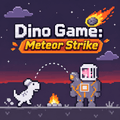
Dino Game: Meteor Strike






More Games You'll Love


















Dino Game: Meteor Strike is a 2D arcade runner with pixel-art graphics, 20 waves that grow harder as you progress, and two boss battles. Falling meteors add to the challenge as you work toward rescuing a pink dinosaur that has been captured.
Gameplay Mechanics
Meteor Warning System
Dino Game: Meteor Strike uses flashing ground shadows to mark incoming meteor strikes, leaving a short window to move out of danger. This warning system makes sideways movement especially useful, since jumping by itself gives you less control over where you land. Moving backward could give you more time to react when obstacles on the ground share space with marked meteor impact areas. Try to keep jumps short as hazards gather more closely together, helping you stay flexible and adjust your position before the next threat reaches you.
Boss Encounter Strategies
Dino Game: Meteor Strike features two boss battles, each focused on a different survival skill. The Fire Pterosaur tests how well you move to avoid attacks, while the Lava Golem demands carefully timed offensive actions. These fights add separate goals to the adventure, giving you more to manage than simply clearing obstacles along the way.
Wave 6: Meteor showers start.
Wave 10: You must avoid attacks from the Fire Pterosaur for a full 20 seconds.
Wave 20: Hurl cooled stones at the Lava Golem’s core.
Movement Controls
A / D or Left / Right: Move sideways.
Space / W / Up Arrow: Jump.
S / Down Arrow: Crouch or drop quickly.
X / K: Hurl stones in the final boss fight.
P / Esc: Pause.
FAQs
Q: Are checkpoints available?
A: Completed waves serve as checkpoints. This is how you can retry from your current stage after a failed attempt.
Q: How many bosses does Dino Game: Meteor Strike feature in total?
A: Dino Game: Meteor Strike has two bosses, encountered at waves 10 and 20, with each fight using different combat mechanics.
Q: How can you anticipate meteor strikes?
A: Meteor impacts are marked by flashing shadows on the ground. Watch these warnings and move clear of the indicated landing spots before the meteors arrive.